Introduction
Trezor.io/Start® is the official gateway to setting up and securing your Trezor device. Whether you are new to cryptocurrencies or an experienced investor, this guide ensures you properly configure your hardware wallet. A Trezor device gives you full control of your digital assets, safeguarding them from online threats through cold storage security.
Unboxing and Connecting Your Device
When you first unbox your Trezor device, make sure the holographic seal is intact. This ensures your device has not been tampered with. Connect the Trezor to your computer using the provided USB cable. Navigate to Trezor.io/Start® in your web browser. This will guide you through downloading and installing Trezor Suite™, the official application for managing your device.
Installing Trezor Suite™
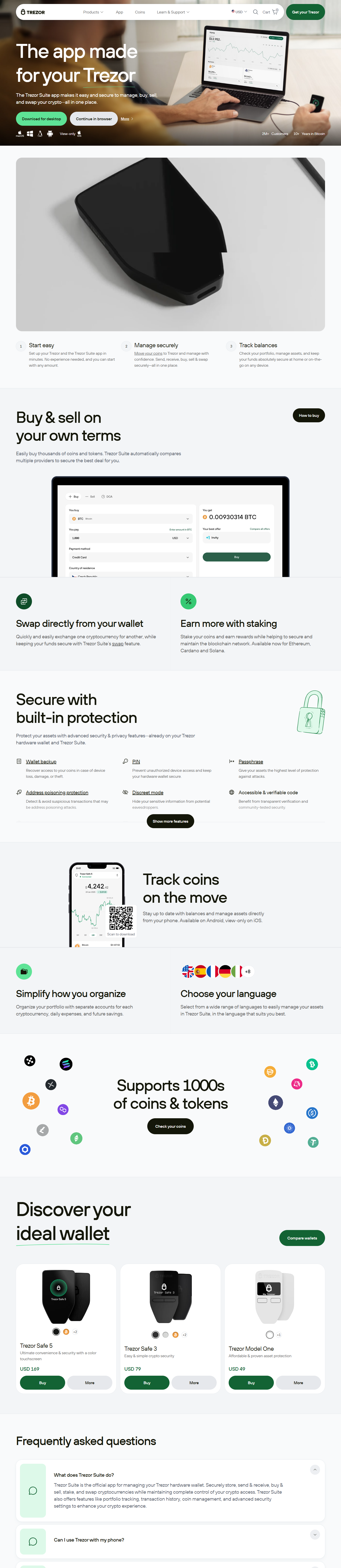
Trezor Suite™ is available for Windows, macOS, and Linux. Follow the on-screen prompts to download the appropriate version for your system. Once installed, launch the application. Trezor Suite™ will automatically detect your device and prompt you to begin the setup process. This is where you’ll initialize your device, update firmware, and create your wallet.
Creating a New Wallet
Choose “Create a new wallet” if you are setting up for the first time. The device will generate a recovery seed—a unique set of 12 or 24 words. Write these words down on the recovery sheet provided in your box. Store this sheet securely offline, as it is the only backup to recover your funds if your device is lost or damaged. Never share your recovery seed online or with anyone else.
Firmware and Security Updates
During the setup process, Trezor Suite™ may prompt you to update your device firmware. Keeping your firmware updated ensures that your device has the latest security patches and functionality. Trezor’s firmware updates are cryptographically signed, guaranteeing authenticity.
Using Trezor Suite™
Once setup is complete, Trezor Suite™ provides a clean and intuitive dashboard for managing your cryptocurrency portfolio. You can send, receive, and track various digital assets directly from the interface. The app supports Bitcoin, Ethereum, ERC-20 tokens, and many other cryptocurrencies.
Security Best Practices
To maximize your security, enable a strong device PIN. This ensures that even if someone gains physical access to your device, they cannot access your funds without the PIN. Consider enabling passphrase protection for an additional security layer. Always verify transaction details directly on the Trezor device screen before confirming.
Conclusion
By following this guide on Trezor.io/Start®, you can confidently set up and secure your hardware wallet. With Trezor, your cryptocurrencies are stored offline, protected from hackers and malware. Always keep your recovery seed safe, update your firmware regularly, and use Trezor Suite™ for managing your portfolio.